Showing posts with label Human Condition. Show all posts

Thursday, July 30, 2020


Then and now. What a sheltered life we live. With all its complications life here where we are is simple though it most definitely is not for other people living elsewhere in a world of mass upheaval. For those people living through the trauma of war and tragedy, areas of the world where disease and exploitation by their governments, neglect and privation take their toll, life is anything but simple; it is a challenge to survive. News reports of events taking place elsewhere on the globe keeps us informed and even at times incredulous that violent strife and existential threats must be faced by others, while our lives proceed along a circumscribed path of peace and stability. Reminding us of our good fortune in living in a country like Canada with its enormous geography and vast natural resources.


Bedtime reading has me lately fascinated by accounts written 550 years ago throughout Europe, penned by people living in England, and preserved by a chronicler of the same era, Richard Hakluyt. His Voyages and Discoveries make for fascinating instruction on the state of the world in the 1560s. Where wars were always on the horizon and humankind was as discriminatory toward others different by ethnicity, culture, religion and tribe as they are at the present. Take this for example:


Presently the Inquisitors came up another pair of stairs, and the Viceroy and all the chief justices with them. When they were set down, then came up also a great number of friars, white black and grey (orders) about the number of three hundred persons. Then was silence commanded and then presently began their severe and cruel judgement.
The first man that was called was one Roger the chief armourer of the Jesus, and he had judgement to have three hundred stripes on horseback, and after condemned to the galleys as a slave for ten years.
After him were called John Gray, John Browne, John Rider, John Moone, James Collier, and one Thomas Browne: these were adjudged to have 200 stripes on horseback and after to be committed to the galleys for the space of 8 years.
Then was called John Keyes, and was adjudged to have 100 stripes on horseback and condemned to serve in the galleys for the space of 6 years.
Then were severally called the number of 53 one after another, and every man had his several judgement, some to have 200 stripes on horseback, and some 100, and condemned for slaves to the galleys, some for 6 years, some for 8 and some for 10.
And then was I Miles Philips called, and was adjudged to serve in a monastery for 5 years without stripes, and to wear a fool's coat or sanbenito during all that time.
Then were called John Storey, Richard Williams, David Alexander, Robert Cooke, Paul Horsewell and Thomas Hull: the six were condemned to serve in monasteries without stripes, some for three years and some for four, and to wear the sanbenito during all the said time.
Which being done, and it now drawing toward night, George Rively, Peter Momfrie, and Cornelius the Irishman, were called and had their judgement to be burnt to ashes and so were presently sent away to the place of execution in the market place but a little from the scaffold, where they were quickly burnt and consumed. And as for us that had received our judgement, being 68 in number, we were carried back that night to prison again.
And the next day in the morning being Good Friday the year of Our Lord 1575, we were all brought into a court of the Inquisitor's palace, where we fund a horse in readiness for every one of our men which were condemned to have stripes, and to be committed to the galleys, which were in number 60 and so they being forced to mount up on horseback naked from the middle upward, were carried to be showed as a spectacle for all the people to behold throughout the chief and principal streets of the city, and had the number of stripes to every one of them appointed, most cruelly laid upon their naked bodies with long whips by sundry men appointed to be the executioners thereof; and before our men there went a couple of criers which cried as they went: behold these English dogs, Lutherans enemies to God.
They returned to the Inquisitor's house, with their backs all gore blood, and swollen with great bumps, and were then taken from their horses, and carried again to prison, where they remained until they were sent into Spain to the galleys, there to receive the rest of their martyrdom: and I and the 6 other with me which had judgement and were condemned amongst the rest to serve an apprenticeship in the monastery were taken presently and sent to certain religious houses.

That was then. This is now. And early this morning, after yet another predictable early morning rainfall, we tucked Jackie and Jillie into their harnesses and walked with them up the quiet street we live on to access the ingress to the ravine and the forest below, to spend the next hour-and-half wandering about the forest trails, mindful of the berries waiting to be picked and eaten and shared with our two little dogs. If these summer days do not represent a blessed life, then what does?


From time to time, as is usual, we came alongside others we know, some just recently introduced as it were, but most familiar to us from years of mutual devotion to the fresh air, exercise and sheer unadulterated pleasure of enjoying tramping through woods in all seasons and all weathers. With most of these people were their companion animals. All of us serene in the landscape. Appreciative but not too engaged in the thought that we are all extremely fortunate.


We may be beleaguered with fear of a global pandemic that haunts the world as a threat to health and recover, taking countless human beings to an early grave, but we are reconciled to the fact that we must take extraordinary precautions to maintain our health and keeping a reasonable distance while still making the most of life's opportunities is certainly to be recognized as cardinal in our efforts to remain well. And so, we do.

Tuesday, July 28, 2020

Excerpt, Richard Hakluyt Voyages and Discoveries : 1589

Voyages and Discoveries : Hakluyt : The Principal Navigations Voyages, Traffiques and Discoveries of the English Nation

A discourse written by one Miles Philips Englishman
put on shore in t he West Indies by Mr. John Hawkins
1568

Image result for hakluyt voyages and discoveries published
Upon Monday the second of October 1457 the weather being reasonable fair, our general Mr.John Hawkins, having commanded all his captains and masters to be in readiness to make sail with him, he himself being embarked in the Jesus, hoisted sail, and departed from Plymouth upon his intended voyage for the parts of Africa, and America, being accompanied with five other sail of ships, as namely the Minion, the William and John, the Judith, in whom was captain Mr.Francis Drake afterwards knight, the Angel, and the Swallow.

Coming to the Island of Gomera being one of the islands of the Canaries, where according to an order before appointed, we met with all our ships which were before dispersed, we than took fresh water and upon the eighteenth day of the same month we came to an anchor upon the coast of Africa, at Cape Verde in twelve fathom water; and  here our general landed certain of our men, to the number of 160 or thereabout, seeking to take some negroes. And they going up into the country for the space of six miles, were encountered with a great number of the negroes : who with their envenomed arrows did hurt a great number of our men, so that they were enforced to retire to the ships, in which conflict they recovered but a few negroes, and of our men there died seven or eight in very strange manner, with their mouths shut, so that we were forced to put sticks into their mouths to keep them open.

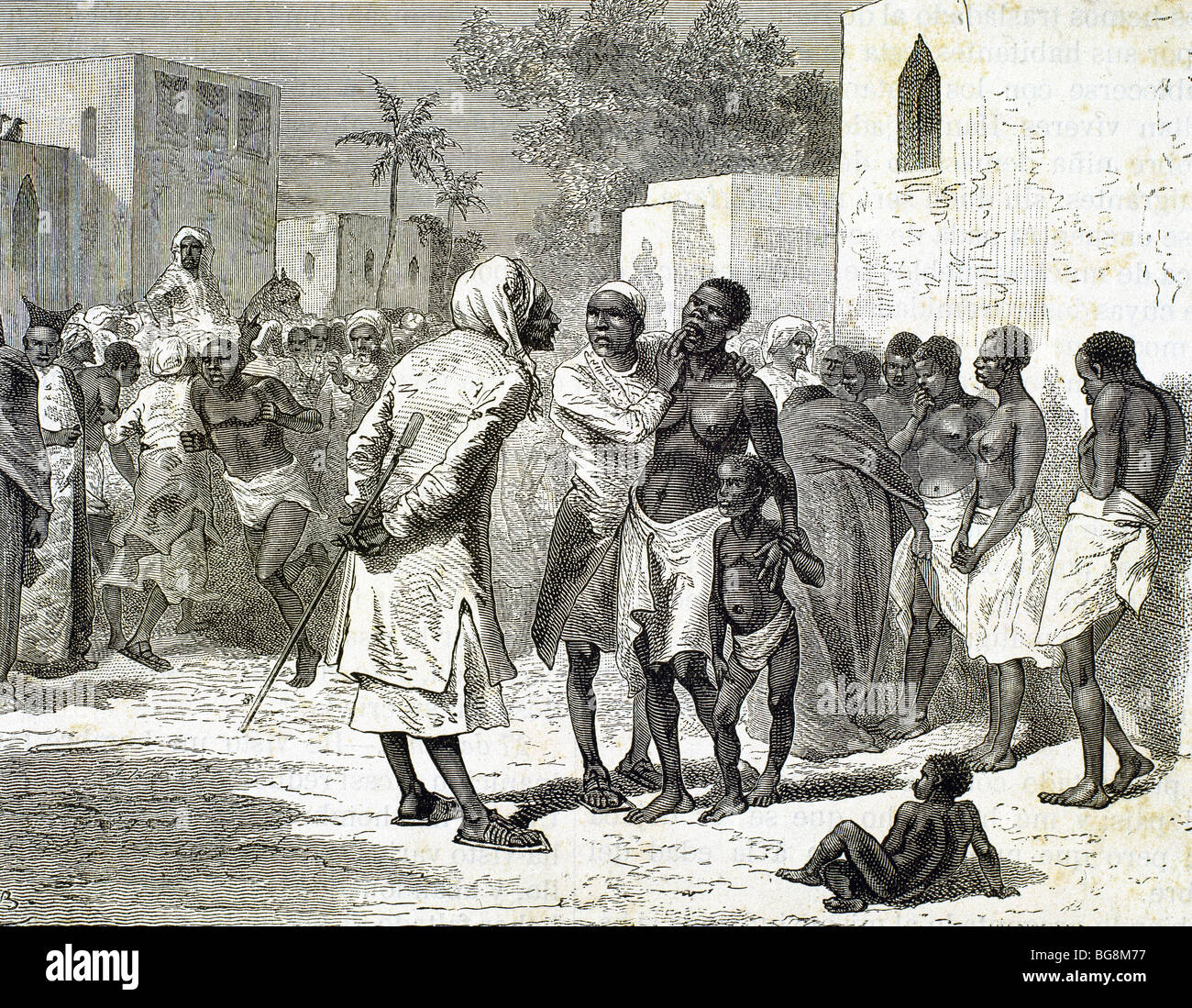
Upon the coast of Guinea, we obtained 150 negroes. There was a negro sent as an ambassador to our general, from a king of the negroes, which was oppressed with other kings his bordering neighbours, desiring our general to grant him succour and aid against those his enemies, which our general granted unto, and went himself in person a land, with the number of two hundred of our men, and the king which had requested our aid, did join his force with ours, so that thereby our general assaulted, and set fire upon a town in which there was at least the number of eight or ten thousand negroes, and they perceiving that they were not able to make any resistance sought by flight to save themselves, in which their flight there were taken prisoners to the number of eight or nine hundred, which our general ought  to have had for his share : howbeit the negro king falsifying his word and promise, secretly in the night conveyed himself away with as many prisoners as he had in his custody : but our general notwithstanding finding himself to have now very near the number of 500 negroes thought it best to depart with them, and such merchandise as he had from the coast of Africa, towards the West Indies and therefore commanded with all diligence to take in fresh water and fuel, and so with speed to prepare to depart. In a storm we lost one of our ships the William and John, of which ship and of her people, we heard no tidings.

Slave Market High Resolution Stock Photography and Images - Alamy

*************************************

Wednesday, May 13, 2020


On occasion, idle musing knocks memory's door to unleash a recall that suddenly springs to life. As when we came across several trilliums blooming in bright carmine while we were traipsing through the woods with Jackie and Jillie this lovely afternoon. A day of increasing warmth, a wide blue sky and the sun brilliant in its daily course across our firmament. Suddenly I recalled an event of a half-century earlier.


That was when we were still living in Toronto with our three children. My husband was never at a loss for destinations within a reasonable driving distance from where we lived and usually they were open, natural spaces, parklands of one kind or another for we have always been fond of natural settings. So our children were introduced at a very early age to the joys of hiking.


We would also take them fairly often to places like heritage pioneer villages, reconstructed to illustrate what life was like in Canada a century earlier. There were a number of such villages, we would visit annually, and one a little further from Toronto, near Kitchener, Ontario, that was named Doon Pioneer Village. We would often take these visits in the spring, as a release from the long winter season.


While we were at the village on the occasion in question, we were approached by an elderly woman. She was tall, thin and pretty sprightly for what we estimated was a ripe old age. She introduced herself to us as a Mrs. Steckle, and asked if we and our children were particularly interested in Canadian heritage. She offered to take us to her farm, nearby. We were intrigued at the offer, and following her directions and her vehicle, arrived soon afterward at a prosperous-looking farm.


She engaged us for hours, taking us around the farm. Into the farmhouse, where she showed us family photographs. She told us her husband was the first non-aboriginal child born in the area. That he had gone to university and was one of the first to graduate with a diploma in modern agricultural techniques. She guided us into a very large and beautiful barn.


My husband recalled the large horses housed there, but can't recall cattle. At that time barn owls were common residents in Ontario barns and I recalled one large owl in flight, leaveing the barn. The horses were show horses, very large, but neither Clydesdales nor Percherons; my husband recalls they were used to pull traditional horse carriages.


Mrs. Steckle walked us to a forested area beside the farm and told us that she and her husband had granted the forest which was a part of their inherited property, as a gift to the nearby community. As we walked through the woods that spring day, we were amazed to see trilliums in flower on the forest floor, the flowers a bright red, at a time when we had never seen, much less knew, that trilliums could be any colour but white, like the floral emblem of the province.


Not long afterward our family moved from Toronto to take up residence and employment in Ottawa. It took another few decades before we came across red trilliums blooming in a forest adjacent to the street where we lived when we moved to another address. And now we see them every spring. As we did early this afternoon when we ventured out on a perfectly lovely day beginning to warm into mid-spring, the sky wide and blue, the sun piercing through the still-bare-of-foliage forest canopy.


This must be a day for memories. It also suddenly occurred to me that at my age, my mother was living in a long-care home. She was in the later stage of frontal-lobe dementia, unable to recognize anyone. Her older sister also lived there, among elderly people unable to care for themselves any longer, with health issues of one kind or another. And while my mother's sister recognized my mother, my mother had no idea whatever that she had a sister she was able to see every day.

Now, during this wretched global pandemic that has upended our world, it is residents of old-age homes and long-care health facilities that comprise the majority of novel coronavirus cases, along with a large share of the deaths that Canada and other countries around the world are experiencing.


Saturday, March 28, 2020


This morning my husband placed a renewal order for prescribed medications through the telephone service of the pharmacy we've used for decades. And in the early afternoon he drove over to pick up the prescription drugs. At the entry of the store two young men acting as attendants informed people entering that no one is permitted to enter with bags. Each person was asked what department of the store, a large supermarket which also houses our pharmacy, they were headed for.


My husband responded that the pharmacy was his destination and he was channeled through. Others were asked to wait until supermarket shoppers exited, because the supermarket was thronged with shoppers. At the pharmacy a plexiglass shield had been installed at each of the counters. And to ensure that clients didn't approach too closely, another type of shield to waist level made certain a separation gap was maintained. All the while a deep cleaning process of all surfaces was being conducted.


At the counter where the assembled prescription is usually handed over in a stapled-shut bag by a pharmacy worker who normally is always on duty, the client is asked to wait on brief standby until the bag is put in place for on the counter, the worker withdraws, and the client is free then to tale possession of the order. We pay nothing because we are seniors and the medications are on the Ontario drug formulary, free to seniors. On the approach to departing the store, an attendant asks if the intention is to enter the supermarket itself; if not, as in my husband's case, the person is ushered out.


On his drive over to the pharmacy along major streets, what was unusual was the infrequency of road traffic; few vehicles driving about. On the other hand, the sidewalks were unusually full of people strolling about; singles, couples, families. As in the supermarket itself, a surprising number of people out and about.


On his return home, my husband washed the light rubber gloves he had worn, hung them to dry, washed his bare hands, opened the bag, put aside the medications, washed his hands again. I am a nag. Soon afterward we exited the house together with Jackie and Jillie into a grey day, heavily overcast, windy, and slightly cooler than yesterday which had been a sunny, beautiful day of 8C.


The milder weather means that our pups can now shed their winter coats and wear woolly sweaters instead, and no boots. We hoped the thick ice layers smothering the trails in the forest would still be as they were yesterday, completely denaturized, almost mushy, and they were. So we set off for our course for the afternoon through the ravine with foot-safe confidence.


We did find that there were a number of people out on the trails that we would come across on a few occasions. It's always easy to tell people for whom hiking through the trails is a new experience, one they've never thought of before, but have turned to as a different experience to relieve boredom. They seem uncertain, a bit lost, rarely know where they are and what direction they're facing. In fact, just the way we feel when we embark on a detested stroll through neighbourhood streets that interlace, on the rare occasion we're shut out of the ravine.


While we were out it became evident soon enough that the sun was trying very hard to emerge from behind lowering banks of grey cloud. It's positioned so much higher in the sky now as it describes its arc from morning to afternoon to evening, than it was two months ago. Giving us in the process longer days so we can enjoy more light and less dismal darkness.


Although, to be sure, nature has provided us with a variant on that kind of 'dismal darkness', introducing us to the fearful presence of a hitherto-unknown coronavirus threatening the health and longevity wherever it strikes, that has succeeded in shutting down most human enterprise the world over.


Saturday, December 14, 2019

It's been dark and gloomy all day. Another rainy day. It should be a bit colder, and than all this rain would be falling as snow. A most unusual winter this year, with extreme cold and snow in November, and here in December we've been having November weather. Most peculiar. There are times, though, when precipitation falling as snow on cold winter days can be life-threatening, particularly driving on highways.

On Wednesday there was a blinding snowstorm on the 401 that caused a number of huge multiple-vehicle pile-ups, and in one of those crashes that took place that fateful day, the life of one unfortunate 33-year-old man from Kingston was snuffed out.
Jack Moon, 33, was killed Wednesday in a massive pileup on Highway 401. jpg

While Ottawa received rain, it was a different story on the 401 with the sudden appearance of snow squalls off Lake Ontario, occluding visibility on the 401 entirely. This is what took the life of Jack Moon. He made the short trip from Kingston, his home, to Ottawa to try to renew his passport which had been lost in a fire that engulfed his home on December 1st. He wanted to try to fast-track the passport to enable his entry to the U.S.

The fire that destroyed the home he, his pregnant wife, their three children and his mother called home also destroyed everything the family owned. Fortunately, no one happened to be home at the time the fire broke out. And then, a few days after the fire the family's 15-year-old dog died of old age. The family now lives in rented accommodation.

In Ottawa, the young man was informed it would be at least ten days for his passport to be renewed; something about the replacement of his birth certificate, the original of which was also destroyed in the fire. So he knew that his hopes to be able to fast-track a passport renewal wasn't going to happen. And that being the case the trip his family had planned, to take the children to Disneyland as a family Christmas celebration wasn't going to happen.

There are times when the world just seems to close in on you and everything seems too much to bear. An experienced truck driver who worked for the City of Kingston, he had recently opened a business of his own as the owner-operator of Blue Moon Karaoke and DJ Service. On its website, he stated he was available for part-time work of any kind.

The young father left Ottawa, disappointed that his family's plans for Christmas had to be abandoned. And then his vehicle, along with another 21 passenger cars and 25 trucks driving helplessly through those snow squalls with virtually no visibility became involved in seven different collisions that marked a six-kilometre stretch of the highway. In the mass collision that Jack Moon had the misfortune to be part of, he parted with his life.

His aching losses now no longer bedevil him. His fourth child is due in April and he won't be there to celebrate with his wife and family. Neighbours, family and friends had initially after the fire, contributed donations of clothing, furniture and cash for the homeless family. To keep their heads above water in the short term.

His sister-in-law set up a GoFundMe campaign post-fire, its goal $5,000. That campaign has been updated and within hours of the update the fund surged to $40,000 and soon reached $80,000. By Saturday, 4344 people had responded to the plea for financial support for this distraught and devastated family. The total had reached $217,751. The GoFundMe campaign link is at: gofundme.com/f/support-my-sister 039s-family.
'Really amazing man' killed in Hwy. 401 crash
Jack Moon was killed in a crash on Wednesday, Dec. 11, 2019.

 "This tragedy for my sister has unfortunately gotten worse. For anyone who had donated it has been greatly appreciated and I know Jack was very thankful along with the rest of the family. At this time any donations are going to be even more appreciated as yesterday unexpectedly they have lost Jack in a car accident and my sister is now having to figure things out without him in their lives. If all you can do is keep them in your thoughts and prayers that's amazing. They can use all the help they can get at this time. Thank you on behalf of my sister and the children."

Monday, November 25, 2019


We haven't seen our old ravine friends Barry and Sheila for ages. But we knew where they were. Late last summer, they had bought a rustic cottage on a remote lake in Quebec, a fixer-upper that Barry intended to spend time working on. They have three border collies, and we knew from the stories they told us about their three charges before summer's arrival and their absence that the three dogs would be enjoying their summer there, and reluctantly return in late October.

We'd been keeping an eye peeled for them in late fall, expecting now and again to see Carter, the more adventurous of the three, prowling around in the forest before his litter-mates showed up, as usually occurs. And then either Barry or Sheila, and sometimes both together would come along, but hadn't seen either or any of them until today, when we left for our daily afternoon walk through the forest trails with Jackie and Jillie.


Jillie was first spotting Carter, then Jackie joined in the rousing yelps of welcome, and then the other two came along, and finally Barry. He told us he had been around to our house but we hadn't been at home. He'd tried knocking at our neighbour's door to the right of us, and again no one answered, but then knocked at our left-hand neighbour's door, and there gained the information that we were alive and well. He was, he said, really glad to see us. And we felt good seeing him as well.

Sheila, he told us, was in Florida for a few weeks, accompanying their daughter's mother-in-law, who has a condominium there. So he was in charge of the household and their three border collies. He was excited to tell us about the birthday gift Sheila had given him, a genealogy test. He showed us the results on his smartphone. Surprising him, no less than us. He'd always assumed he had a British background, even though surname connects with Eastern Europe.


When he was a year old, his biological father had left him and his mother to fend for themselves. This was in Saskatchewan, and because his mother's parents lived in the same city, she moved in with them, and he was partially raised by his grandparents, who had indeed come to Canada from Poland.
Years ago, he told us, he was curious about his father, and tried to find out details that his mother would never divulge.

What he discovered was that his father was known to be a violent man, a man with a police record, considered to be a danger to others, and who was known to use lethal weapons. His father's parents once when he was still under ten years of age, had happened to run into his mother and asked her how their grandson was. Fine, she told them, he's doing just fine. They wanted to know if they could see him, and she told them they weren't interested in seeing him when he was two, three, four or five, so she saw no utility in putting them together at that juncture.

She had remarried when her son was three, and the man she married became the real, functional and loving father that our friend had been deprived of when he was a baby, an infant, and a young boy. He had never wanted to contact  his biological father and now that he is himself in his mid-50s and knows  his father is still alive, he has no interest in seeing him at this stage of their absent relationship.


The results of his genealogy was 17% English, 55% East European, 14% Baltic and 14% Asian. He was nonplussed, but there it was. But that's not all, he started receiving communications from other people he had no idea shared any of his genealogical background. And those contacts were really intriguing, giving him more information about himself and his family background than he might ever have imagined.

We might never have imagined that Barry had an Eastern European background. Barry is the quintessential Canadian. He was a tactical unit member of the RCMP, and has always focused on strength training, running, bicycling, extremely action-oriented until a series of direly threatening medical conditions, some relating to the physical and psychological stress of his work hit him.

But now that we do know that, it seems strange in a way that we have that in common, since my father and my husband's parents also originated in Poland. The world is becoming smaller as we age.

Monday, October 21, 2019


Max seems to skim the trails in the ravine. There are occasional runners we come across in the ravine on lovely days like yesterday and in fact there were two that passed us, singly one after the other. Max's speed can easily match theirs. He doesn't run, but he certainly moves along at top speed. We wouldn't make the attempt to match his pace. We simply couldn't. He uses two walking sticks to great advantage and covers a lot of ground.

Jackie and and Jillie are always glad to see Max barrelling along, they run toward him, tails going like miniature metronomes, quietly bookending him and matching his pace. But they don't go far because Max, always-in-a-hurry-Max, never fails to stop and have a long confab with us. We talk about anything at all. He has wide-ranging interests and so do we.

He has his opinions and we, of course, do as well. Just as my opinions don't always align with my husband's, nor do they necessarily with Max, but the requisite respect is there for one another's intellectual integrity, so we can discuss disparate matters without ire growing out of the conversation. And as we speak together, Jackie and Jillie remain close by, doing their best not to be noticed while they pick up detritus and gnaw away.


Max is a Swiss-Canadian, he's likely in his mid-60s, most of his extended family remain in Switzerland but he and his wife, their son and their daughter-in-law live in Canada, occasionally hosting family members from abroad. Max is about 5' 9", built fairly spare, and he owns a civilized mop of curly grey hair. He had the house his wife and he now occupy built on a lot he bought years ago in the community.

It was later that he had conveniences installed to help him care for his wheelchair-bound wife; he had the bathroom reconfigured, and had hydraulic lifts installed there and elsewhere in the house. So it makes sense that in covering as much territory as he challenges himself with in the ravine to ensure his mobility remains intact, he does it at a speedy rate. That's to ensure that he gets his physical recreational activity done in the time that a daily visiting nurse remains in his home to spell him off, caring for his wife.


So he's busy with a fairly circumscribed lifestyle. We run across him occasionally at the supermarket. It's odd when  you're accustomed to seeing a very familiar place in just one setting and one alone. When, on occasion that familiar face suddenly pops up elsewhere it seems incongruous and for a moment leaves you puzzled as in 'what's he doing here?'. Even on occasion thinking you know the face but can't place it in the context of from where.

Health, activity, well-being consumes Max; he wants to ensure as much as he can, that he can remain active and mobile and interested in life. He is all three. Despite that he's had open-heart surgery, and two hip replacement surgeries, the second one just this last summer. He, just as we do, relies heavily on the woodland trails for a particular type of life enjoyment. And that to access that enjoyable aspect of life, we approach nature and are exposed to all the fluctuations in nature's itinerary, makes us grateful for what we have.


Thursday, August 15, 2019


Sometimes it happens that you get to know the personal lives of what might appear to be casual acquaintances better than the lives, circumstances, trials and tribulations of close neighbours whom you've known for years. Some neighbours will unhesitatingly confide personal details you may or may not wish to know about, and some abide by the wisdom that intimate details of one's life are best kept to oneself.

Often, the more casual an acquaintanceship is, the more some people feel willing, and perhaps determined, to divulge circumstances of their lives that tend to be anything but uplifting, much less of value to others. Everyone has a story. Everyone has problems. Everyone learns to solve their problems because they must. Yet there's a relief valve that people take advantage of to air grievances or to transmit their annoyance or puzzlement by speaking to others in details illuminating one perspective, the only one they can recognize since it impacts directly on their well-being.


Sometimes a sympathetic ear is all it takes to relieve the pressure people feel when they're pressed to the verge of depression or exhaustion with situations they feel helpless to untangle themselves from. And sometimes people just want to air a situation that will, when divulged, leave an aura of prestige or entitlement or admiration. And then of course, there's sheer gossip as well. Some of it innocuously harmless, and some laden with ill intent. Sometimes it's hard to distinguish one from the other.

And occasionally conversations fall into none of those categories quite so neatly. Yesterday we had decided to set aside a morning walk given that there was no rain in the forecast, the day dawned cool and bright, and there would be no real heat build-up since the high for the day was 26C and a good stiff breeze made the atmosphere beyond pleasant. So much so that on our return home after our walk through the forest trails with Jackie and Jillie, I decided to remain out-of-doors and tend to the gardens. Lots to do, cutting back spent flower stalks, trimming here and there, weeding, sweeping accumulated detritus from the walkways, and finally watering the parched borders of the gardens and the garden pots.


During the course of our walk, we came across two different sets of acquaintances. One, we knew, had planned for a kitchen and bathroom remodelling and tradesmen had finally arrived to do the work contracted for, which was signed in February, and only now in August being started. I've a fairly good idea of how disconcerting it is to have everything turned upside-down and inside-out, but in our case it was always my husband who was the person involved in the work. He may have been a government bureaucrat all his working life, but he is also adept at plumbing, electrical work, rebuilding counters, laying tile and anything else requiring work of just about any nature.

Our friends recounted how to obtain some privacy they've been having their three daily meals out on their deck to avoid countering the workmen who have invaded their home. And how very glad they'll be when everything is finally completed. They like the people working for them, but having them there every time they turn around is stifling, they tell us. Aside from the fact of the entertainment they provide to the workers with their own quibbles over failing to agree on a host of choices with the work being undertaken. We commiserated.


Ah, and then there's the friend who informed us a while ago that she's been busy planning two weddings. Two of her children getting married, albeit months apart. But each want vastly different ceremonies, accoutrements and events planned for them. She felt as though she was drowning in preparations, consuming so much of her attention and time. One of the marriage events just recently concluded successfully, she told us with a big sigh and a smile to match, the other still pending.

But another distractlon has arisen and it has given her no joy whatever. Her 94-year-old mother who still lives in her own home, has been giving indications that she's confused with her medications; forgets to take them, takes them at inappropriate times, or in the wrong doses. She has a visiting personal care worker contracted through an agency who stays with her twice weekly for three hours each time, who has been with her for seven years.

Her mother confided to her daughter that the care worker asked for a loan of $3,000 which she would pay back as soon as she could, to pay for veterinarian services for her dog. The elderly woman refused with regret. And our friend said how glad she is that her mother is still able to gauge situations to determine how to react. Except that, she said, she was over at her mother's place when she noticed a glass full of liquid that looked oddly blue. What's that, she asked her mother; it looks like Windex. Windex it was. The care worker had evidently 'prepared' it for her mother.

So our friend contacted the agency, terminated the worker, and asked for a replacement. In the interim, she and her son are busy making appointments at a number of area long-term care homes for her mother. Most of which have at minimum a two-year waiting list. And she feels prepared to tear her hair out. We most definitely know which of our friends' problems we would prefer to share, if any.

Tuesday, August 13, 2019


We have neighbours on either side of us and they're as different as night and day. But, as the old saying goes, you can't pick your neighbours. One family has lived in their house for 31 years. We've known their children all their lives, and they're now young adults. The other neighbour moved in as a second-buyer for the house, around 25 years ago and we're as familiar with their children as with the other. Our house was the last built on the street, and we moved into it 29 years ago.


One neighbour takes very good care of their property, just as we do. The other neglects it completely and the place looks like an neglected, overgrown, abandoned lot. You can guess, which of the two families is friendly and which not. The neighbour who is slothful will cross the street rather than have to meet up with another neighbour; acknowledgement and communication is so distasteful to him.


One of the neighbours is generous and given to long conversations, the other wouldn't lend someone else a garden implement that cost a dollar, not that he'd use any such contraption. There are other neighbours on the street living close by and further along whom we've known for decades and relations with them are always open and friendly. Some among them are our very good and valued friends. Of the entire street of various families about 2 percent of residents ever venture into the forest just beyond the street we live on.


It's strange how people are, what their values happen to be, the manner of their personalities and how they interact with their environment and those who live among them. I used to regularly act as a volunteer canvasser for years for the street, going door to door for any number of charitable medical causes, among them cancer, diabetes, arthritis, the blind, and others. And doing so really reveals the inner character of people. Some would confess that dear ones died of cancer and would never donate as much as a dollar.


Others made it their business to regularly donate to all charitable causes because they saw the value in helping others, in funding research, as an integral part of being a member of a community. As I became older, nearing my 75th birthday I kept telling myself I was ready to shelve such volunteering, someone else could take it up, I'd had enough. But what convinced me that I really had had enough was when that socially-averse neighbour was so rude and insulting the last time I canvassed that I never returned to such volunteering again.


Yes, I know, my fault for taking such things so personally. When we are out on forest trails in the ravine if we happen to come across others we don't know, it is automatic to casually acknowledge another person's presence as you pass. On the rare occasion, some people will simply ignore the overture and continue on their way. It always leaves a bad taste in my mouth, but I suppose it shouldn't. It's their perfect right not to want to be approached by a stranger with a civil greeting.


When we were out yesterday morning with Jackie and Jillie we happened to come across a few people and their dogs whom we'd never before seen. Most people, when they come across others will smile a greeting and move on. And so it was with these people. Some like to stop briefly and exchange pleasantries, and we're always happy to oblige. Or to give directions when they're asked of us when others, unfamiliar with the terrain, want information helpful to them.


Perhaps it's a given that people who prefer to shy away from others are unhappy people, dissatisfied with life and their place in the scheme of things. But not necessarily. Sociopaths rarely much care what others think or feel and they regard no obligation to present themselves as civil. Simply put, yet another manifestation of the amplitude of differences between people.