There are many people in any community who have a profound affinity for nature, for whom there is an urgently pressing need to get out into a forested environment, to ease their sense of time and place into the realization that peace can be found if one only seeks it out. Somehow, cares and concerns seem to evaporate as a sense of ease nestles over one's consciousness in a natural setting. They may return when the sense of immediate reality returns as we exit those natural realms, but they assume a much lesser presence in our minds.
We gain a kind of comfort and confidence that we have allotted too much weight to things that are troubling but transitory in our lives, manageable with a little effort and distance, once we have the opportunity to rest our minds, taking them away from those immediate concerns. Needless to say this works for some all-consuming concerns, not all, but even those that impinge so heavily upon us that they cannot be dislodged even for a second, tend to assume a more well-rounded proportional weight leaving us with the impression that we can deal with them, and we do.
That's the sober side of life, alleviated as though magically by contact with the calming effect of a natural landscape. For the most part we venture toward those landscapes for the same balming effort, simply as an important part of our everyday lives, if we're fortunate enough to be able to. Yesterday, going through the ravine on yet another atmospherically dark and gloomy afternoon we came across an acquaintance with her dog, sighing her loss at being unable to be there for the past week, due to illness, and how relieving it has been for her to be well enough to return.
And as dark and gloomy as the day may be, in the interior of a wooded area there are captivatingly dramatic little scenes here and there. And if, though the sky has been clouded all day, when the sun begins to set and dusk slowly set in, you are there and able to capture the beauty of it all, there's a satisfying glow at being there, just then, witness to a sublime event.
Monday, December 7, 2015
Sunday, December 6, 2015
"My message to French Jews is the following: France is wounded with you and France does not want you to leave."
"France tells you again of its love, support and solidarity. That love is much stronger than the acts of hatred, even if such acts are repeated."
"How can we accept that cries of ‘death to the Jews’ can be heard on the streets? [The] first question that has to be dealt with clearly is the struggle against antisemitism."
"History has taught us that the awakening of antisemitism is the symptom of a crisis for democracy and of a crisis for the Republic. That is why we must respond with force."
"How can we accept that in France, where the Jews were emancipated two centuries ago, but which was also where they were martyred [during the Nazi Holocaust] 70 years ago, that cries of ‘death to the Jews’ can be heard on the streets? How can we accept that French people can be murdered for being Jews? How can we accept that compatriots, or a Tunisian citizen whose father sent him to France so that he would be safe, is killed when he goes out to buy his bread for Shabbat?"
"[There] is a historical antisemitism that goes back centuries. There is also a new antisemitism that is born in our neighborhoods, coming through the Internet, satellite dishes, against the backdrop of loathing of the State of Israel, which advocates hatred of the Jews and all the Jews."
"This is the message we have to communicate loud and clear. How can we accept that in certain schools and colleges the Holocaust can’t be taught? How can we accept that when a child is asked, ‘who is your enemy,’ the response is ‘the Jew?’ When the Jews of France are attacked, France is attacked, the conscience of humanity is attacked. Let us never forget that."
French Prime Minister Manuel Valls -- 2015
Jews have never forgotten. France has. While the French Prime Minister may spout these rhetorical declarations of intent, the simple fact is, the barbarians have already entered, and taken over significant portions of the country. France now hosts more Muslims than any other European country. More of these citizens of France have departed to fight with Islamic State than from any other country of Europe. No gates can be closed against the jihadists, the haters, the Islamists glorying in committing atrocities for there is an absence of barriers to their presence.
The response to the question 'how can we accept?', is that the acceptance has already taken place. And the unspoken recognition of that fact is weary resignation. The most immediate victim is the Jew, but this has always been the way. Jews first, then others to follow.
The absence of mention that this virulently vicious new anti-Semitism has infiltrated France through the migration of Muslims whose tradition it has been to demonize Jews, to blame them for all the world's ills, above all because they have not surrendered to Islam is conspicuous. There has always been an undercurrent of anti-Semitism in French society, despite that French Jewry has had a long home in the country, a distinguished role enriching French society through the ages.
It was the historical advent of an invasion by Nazi Germany that made it a state purpose to dedicate itself to isolating Jews, setting them apart by edict, preparing them for the Final Solution that marked France's first real and entire betrayal of its French citizens who happened to be Jews. This second time around reflects another invasion, this one accommodated by official France itself through the acceptance of Muslims reflecting the country's colonialist past, from : Tunisia, Morocco and Turkey.
Bringing with them their lethal hatreds, their tribal, ethnic, religious bigotry, building momentum toward a wholesale outbreak now and again with its dual target of breaking down prevailing law and order in France when pressure builds sufficiently among its disaffected demographic whose role as French citizens has not come close to denting the insular armour of Islamist exceptionalism leading to cries of supra-'equality', rejecting fraternity, equating liberty with Sharia law.
In the past, the bulk of French citizenry accommodated themselves to the sequestration of and disempowering of citizenship belonging to the Jewish French contingent under fascist rule. The Vichy government of France was in every way equal in its ferocious contempt and hatred of Jews to that of its Nazi masters. Those courageous resisters among the population of France who made it their purpose to defy and to push back against the Third Reich in France, were equally loathed by French and German fascists.
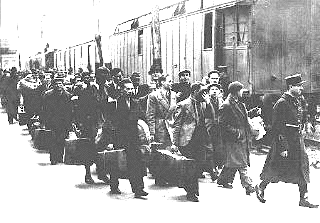
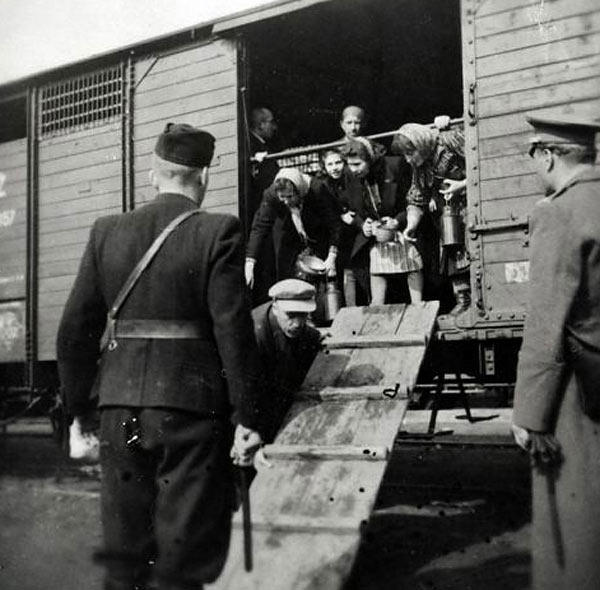
All through the spring and early summer of 1942, France as a whole remained unmoved by the fate of its 350,000 Jewish inhabitants. The country that had so fervently embraced the Rights of Man seemed curiously willing to sit by while one decree after another was enacted against the Jews, watching them debarred from professions, forbidden places of entertainment, relegated to the last carriages on the metro, and now herded on to cattle trucks bound for Poland. The Germans had not actually asked for the cattle trucks; this initiative came from the French railways, the SNCF. It was on French trains, driven by French engine drivers that deportees were conveyed to the border.
In his offices in the Prefecture of Police, Poinsot [French commissioner of police, Pierre Napoleon Poinsot] conducted his interrogations. He backed them up with torture. Men were hung from their thumbs, burnt with cigarettes and had their heads plunged into baths of water; women were stripped naked, made to kneel, and forced to listen to the screams of their husbands, being tortured in the next room. Those who refused to speak, to give names and betray colleagues, were held and tortured until they did so; or they died. Poinsot's team was soon known as the brigade des tueurs, the brigade of killers, and his interrogatoire prolonge became an experience known and dreaded by the Underground. Poinsot, said a Bordeaux policeman, 'massacred' suspects.
The Gestapo -- who gave him his own number, 192, in their ranks -- took to warning recalcitrant prisoners that unless they cooperated they would be turned over to Poinsot and his men.
Along with torture, the French inspectors went in for looting and extortion. Bordeaux, after Paris, was the place in which repression would become the most brutal in the whole of France, and the city itself, as Ouzoulias of the Bataillons de la Jeunesse , would later say, turned into 'a cemetery of the finest fighters'.
A Train in Winter; an extraordinary story of women, friendship and survival in World War Two by Caroline Moorehead
Saturday, December 5, 2015
This street runs off a main thoroughfare, a busy main street with lots of traffic. The ravine that we walk in daily runs across that main street and continues on albeit not quite as lengthily as it does on 'our' side of the main street, and that part of the ravine provided an alternative opportunity for immersing ourselves in nature walks when the upper portion last fall and winter teemed with large heavy earth-moving machinery in the reconstruction of the bridges we use that enable hikers to pass over deep gullies running with tributaries of the main creek.
The street is a winding one, and at the other end it meets the street running behind it which itself meets the main street at its opposite end. That street is comprised of all single-family houses, built about 30 years ago by a construction company that roughly 20 years ago went out of business. They had a poor reputation for the quality of the homes they built and some people had serious problems with foundations and drainage. The homes on our street were built about the same time, but by a construction firm that had been around for much longer, with a superior reputation for quality-built homes. They had, in fact, built the home we owned previous to this one in which we had lived for 20 years, five years short of our time in our present home. On our street there are single-family detached homes and also attached townhouses. Running off the bottom half of the street is another which has only attached townhouses, smaller and more crowded together.
About halfway down the street live an elderly couple, likely younger than us, but one half appears to have serious health problems impeding free mobilization. It is a house that I would stop by regularly during my many years of volunteer door-to-door canvassing for a variety of charitable-health organizations. The man of the household always answered the door and not once would he yield to my requests for donation to aid any of those charities. Several times he informed me that he expected, when someone came to his door, to be addressed in French, although his English was excellent. Once, in exasperation, I responded that I too was bilingual and if he wanted to accommodate my Yiddish we would get along just fine.
Last year I gave up canvassing. Although the people living on the street are for the most part courteous and many of them generously respond to such charitable fund-raising activities, I ran out of the little enthusiasm I was able to muster to continue, after 40 years of volunteering. Last year we began seeing this man and his wife out and about, in a sense, on the street. He is a tall, lean and erect though fragile-appearing man, and she is short and plump and walks haltingly with the aid of a walker, pushed before her. He measures his gait to walk close by her, and their little procession of outdoor action takes place several times daily; morning and afternoon. He appears to be devoted to her well-being, obviously his partner of many years, and that is certainly to his credit.
His curt dismissals of my requests as a canvasser aside, when we'd see them on the street I would always smile and greet them; at first only she shyly responded. Over time, he began to thaw as well and genuinely smile at us. Previously, his smile had been condescendingly supercilious as he shut the door in my face. Over the summer months we would see them, and on occasion, at least once a week, she would be shepherded by a home-care worker, a friendly, talkative woman who liked to talk about herself.
Now, when we see the husband-and-wife duo, it is when we are en route to the ravine for our daily amble in there, as they slowly proceed up and down the street for exercise. Understandably, in this late-fall weather we're no longer to be seen in the front garden with our little dogs. She seems enthralled with our small poodles and loves to touch them if I'm standing close, holding one of them. She has the manner of an innocent child, and the bland face of a doll perched atop her short, stout figure. She likes to stop and chat, and now time has shown that her husband does as well. The weather will do for a topic, but then they seem comfortable enough with us now to talk about just anything, perhaps to relieve the tedium of their existence, tethered to short distances from home.
The street is a winding one, and at the other end it meets the street running behind it which itself meets the main street at its opposite end. That street is comprised of all single-family houses, built about 30 years ago by a construction company that roughly 20 years ago went out of business. They had a poor reputation for the quality of the homes they built and some people had serious problems with foundations and drainage. The homes on our street were built about the same time, but by a construction firm that had been around for much longer, with a superior reputation for quality-built homes. They had, in fact, built the home we owned previous to this one in which we had lived for 20 years, five years short of our time in our present home. On our street there are single-family detached homes and also attached townhouses. Running off the bottom half of the street is another which has only attached townhouses, smaller and more crowded together.
About halfway down the street live an elderly couple, likely younger than us, but one half appears to have serious health problems impeding free mobilization. It is a house that I would stop by regularly during my many years of volunteer door-to-door canvassing for a variety of charitable-health organizations. The man of the household always answered the door and not once would he yield to my requests for donation to aid any of those charities. Several times he informed me that he expected, when someone came to his door, to be addressed in French, although his English was excellent. Once, in exasperation, I responded that I too was bilingual and if he wanted to accommodate my Yiddish we would get along just fine.
Last year I gave up canvassing. Although the people living on the street are for the most part courteous and many of them generously respond to such charitable fund-raising activities, I ran out of the little enthusiasm I was able to muster to continue, after 40 years of volunteering. Last year we began seeing this man and his wife out and about, in a sense, on the street. He is a tall, lean and erect though fragile-appearing man, and she is short and plump and walks haltingly with the aid of a walker, pushed before her. He measures his gait to walk close by her, and their little procession of outdoor action takes place several times daily; morning and afternoon. He appears to be devoted to her well-being, obviously his partner of many years, and that is certainly to his credit.
His curt dismissals of my requests as a canvasser aside, when we'd see them on the street I would always smile and greet them; at first only she shyly responded. Over time, he began to thaw as well and genuinely smile at us. Previously, his smile had been condescendingly supercilious as he shut the door in my face. Over the summer months we would see them, and on occasion, at least once a week, she would be shepherded by a home-care worker, a friendly, talkative woman who liked to talk about herself.
Now, when we see the husband-and-wife duo, it is when we are en route to the ravine for our daily amble in there, as they slowly proceed up and down the street for exercise. Understandably, in this late-fall weather we're no longer to be seen in the front garden with our little dogs. She seems enthralled with our small poodles and loves to touch them if I'm standing close, holding one of them. She has the manner of an innocent child, and the bland face of a doll perched atop her short, stout figure. She likes to stop and chat, and now time has shown that her husband does as well. The weather will do for a topic, but then they seem comfortable enough with us now to talk about just anything, perhaps to relieve the tedium of their existence, tethered to short distances from home.
Friday, December 4, 2015
Stranger things have happened. If I can recall, it was perhaps fifteen years ago when a similar weather pattern emerged at the same time of year. And it's looking increasingly certain that the Ottawa area will remain without snow for the Christmas holiday period. According to Environment Canada forecasts we're in for a milder December, and we've already experienced what happens when the atmosphere remains milder than usual, when copious rain that otherwise would have resulted in substantial snowfalls, occur. Needless to say, when the temperature hovers between subnormal and normal for the time of year, ice fog occurs, and so does freezing rain, creating hazardous conditions.
When we set out for our usual walk in the ravine yesterday, we were all of us wearing outerwear reflecting the need for suitable maximum coverage from a wet atmosphere. We set out in a steady drizzle, with dark skies overhead assuring us that much more was yet to come.
But when we had gained some distance in the ravine only partially through our usual circuit, the prevailing dimness lifted and before long we could see shadows and here and there sunlight settling on various patches of the forest floor. The transformation from gloom to brightness was swift and soon enough the entire forest was lit up. Everything around us in the forest was saturated; it would take more than a brief sunny interlude to make any difference in that direction, but the sodden forest was bathed in bright light, and so were we.
Quite beautiful how the woods presented, not that they weren't equally beautiful without the illumination when dimness gives the environment a mystical, brooding appearance, but now with everything revealed within the glory of bright highlighting, an almost audible sigh of exuberant relief could be imagined emanating from the drenched forest.
And then, when our circuit was completed and we made our way back up the first long hill that descends from the street into the ravine, the already dissipating brightness swiftly absented itself. Above the houses on the street dangled once again those dark threatening clouds, heralding even more rain.
Thursday, December 3, 2015
In the hiatus between late fall, when frigid temperatures gradually build and frost penetrates the ground, until the time when snowfall is regularly experienced and an accumulation begins to blanket the landscape, there is a brooding quality to the atmosphere that we encounter in the woods. The prevailing light filtering down from above through bared branches becomes dimmer and wind rustles whatever dried foliage remains on some immature ironwood and beech trees, transparently light-brown, giving a bit of bright colour to the monotone shades of black and grey.
On some days when the sky is pure pewter in colour, a silvery light pours into the woods below, providing the environment with an evanescent silver appearance that seems arcanely beautiful. When freezing rain has come down throughout the nighttime hours, hours later when the rain stops and the temperature rises slightly, branches that were covered in a layer of ice begin to shed the ice, and globules of iridescent-bright ice-melt dangle into view.
Yesterday was a gloomy version of a woodland perambulation. Rain had penetrated the ground although it remained frost-hard and lumpy underfoot. Exposed clay portions of the trails running up and down the ravine were dangerously slippery and care had to be taken not to descend unintentionally prone in dismaying surprise. We saw no one else out and about. A twilight atmosphere prevailed, with a hint of brooding dimness.
We had made certain to wear rain-proof outer garments in preparation for an any-second downpour, but we escaped that scenario. Still, it would take a lot to convince us to pass on any opportunity any day to venture out into the ravine. Why would we avoid that exposure to our natural surroundings when even under inclement conditions the landscape is so beautifully compelling?
On some days when the sky is pure pewter in colour, a silvery light pours into the woods below, providing the environment with an evanescent silver appearance that seems arcanely beautiful. When freezing rain has come down throughout the nighttime hours, hours later when the rain stops and the temperature rises slightly, branches that were covered in a layer of ice begin to shed the ice, and globules of iridescent-bright ice-melt dangle into view.
Yesterday was a gloomy version of a woodland perambulation. Rain had penetrated the ground although it remained frost-hard and lumpy underfoot. Exposed clay portions of the trails running up and down the ravine were dangerously slippery and care had to be taken not to descend unintentionally prone in dismaying surprise. We saw no one else out and about. A twilight atmosphere prevailed, with a hint of brooding dimness.
We had made certain to wear rain-proof outer garments in preparation for an any-second downpour, but we escaped that scenario. Still, it would take a lot to convince us to pass on any opportunity any day to venture out into the ravine. Why would we avoid that exposure to our natural surroundings when even under inclement conditions the landscape is so beautifully compelling?
Wednesday, December 2, 2015
In a sense he is Everyman, albeit in decline, for he is now 72 years of age, and beginning to look like a man whose facade is one of great personal satisfaction while his inner landscape is a bleak, bleak place. As Everyman he does his utmost to be content with his life, and his ongoing pursuit of happiness is evident as he waxes enthusiastic about his most recent travels as a global traveller viewing the world through the lens of a tourist.
He lives alone now, not by conscious choice, but by circumstances of his very own devising. He simply never thought ahead to how his behaviour would play out in the consciousness of his wife, and now he is bereft of a companion. Not that he hasn't tried over the succeeding years to replace her. But he is a fastidious man, and his attempts have been to replicate the physical dimensions of what he spurned. He wants a younger woman, though not too young, and she must be physically fit and she must, above all, be attractive. He has introduced us to a few of these not-too-young, attractive and seemingly intelligent women whose intellect, it must be admitted, surpass that of his former wife.
And perhaps that explains why his alliances have never lasted though on at least two occasions women obligingly moved into his home for brief periods before ultimately departing. From the lapse now in such occasions, it would seem he has relented in his drive to find a suitable wife-substitute. Surely his wandering eye hasn't dimmed to that extent, I wonder?
On the other hand, perhaps so. He has devoted himself to upgrading his already sumptuous home with the latest in decor, because funding those changes presents no difficulty to him. On the latest tour through his home, he proudly pointed out all the superb details in craftsmanship displayed in the rooms he inhabits like a grey ghost, all representing a costly output, and appearing as though straight out of a home-fashion magazine; beautiful and somehow sterile. He intends, he says with a smile behind which is a trace of gravity, to die in that house. And perhaps he will.
His latest world trip had been to various points on the African continent. He always regales us afterward with details of his travelling experiences, how enjoyable they have been, the sights he has seen, the interchanges with people, his admiration for the heritage, history and traditional cultures he has been exposed to. He is, in fact, a most amenable person, someone who perfectly fits the adjective "nice".
He is, however, now struggling with a mysterious ailment. He has long had a very mild form of muscular dystrophy (Oculopharyngeal) which he claims has not impinged on his state of health to any unmanageable degree. He has always been a very active, fit person, skiing in the winter, swimming in his inground pool in the summer and belonging to an area fitness centre. Two days ago he said he might one day join us in a ravine walk, to see what it's like; this from a man who has lived adjacent a wooded ravine for over a quarter-century and never once ventured into it.
Try it, we said, you'll enjoy it. Not now, he responded, telling us he has been unable to exert much physical energy in the past month or so; he was diagnosed with jaundice and with low iron levels, though he has ample iron circulating in his system, it is not accessible. He is now easily exhausted, walking up the street to retrieve mail from the community mailbox adjacent the ravine entrance is all he can manage. His doctor, he says, hasn't been much help and the specialists he has consulted don't quite know what the problem is, though he has been given medication to aid in coping with the symptoms.
He lives alone now, not by conscious choice, but by circumstances of his very own devising. He simply never thought ahead to how his behaviour would play out in the consciousness of his wife, and now he is bereft of a companion. Not that he hasn't tried over the succeeding years to replace her. But he is a fastidious man, and his attempts have been to replicate the physical dimensions of what he spurned. He wants a younger woman, though not too young, and she must be physically fit and she must, above all, be attractive. He has introduced us to a few of these not-too-young, attractive and seemingly intelligent women whose intellect, it must be admitted, surpass that of his former wife.
And perhaps that explains why his alliances have never lasted though on at least two occasions women obligingly moved into his home for brief periods before ultimately departing. From the lapse now in such occasions, it would seem he has relented in his drive to find a suitable wife-substitute. Surely his wandering eye hasn't dimmed to that extent, I wonder?
On the other hand, perhaps so. He has devoted himself to upgrading his already sumptuous home with the latest in decor, because funding those changes presents no difficulty to him. On the latest tour through his home, he proudly pointed out all the superb details in craftsmanship displayed in the rooms he inhabits like a grey ghost, all representing a costly output, and appearing as though straight out of a home-fashion magazine; beautiful and somehow sterile. He intends, he says with a smile behind which is a trace of gravity, to die in that house. And perhaps he will.
His latest world trip had been to various points on the African continent. He always regales us afterward with details of his travelling experiences, how enjoyable they have been, the sights he has seen, the interchanges with people, his admiration for the heritage, history and traditional cultures he has been exposed to. He is, in fact, a most amenable person, someone who perfectly fits the adjective "nice".
He is, however, now struggling with a mysterious ailment. He has long had a very mild form of muscular dystrophy (Oculopharyngeal) which he claims has not impinged on his state of health to any unmanageable degree. He has always been a very active, fit person, skiing in the winter, swimming in his inground pool in the summer and belonging to an area fitness centre. Two days ago he said he might one day join us in a ravine walk, to see what it's like; this from a man who has lived adjacent a wooded ravine for over a quarter-century and never once ventured into it.
Try it, we said, you'll enjoy it. Not now, he responded, telling us he has been unable to exert much physical energy in the past month or so; he was diagnosed with jaundice and with low iron levels, though he has ample iron circulating in his system, it is not accessible. He is now easily exhausted, walking up the street to retrieve mail from the community mailbox adjacent the ravine entrance is all he can manage. His doctor, he says, hasn't been much help and the specialists he has consulted don't quite know what the problem is, though he has been given medication to aid in coping with the symptoms.
Tuesday, December 1, 2015
Dusk sends down its grey lighting absent shadows on our landscape earlier now that we're in December, awaiting the Winter Solstice in several weeks' time. Having turned the clocks 'back' to save daylight, we lose it earlier in the evening hours. It doesn't seem like a reasonable trade-off, actually. And in fact, we are now being introduced to twilight hours at either end of the day, in the early morning hours and the early evening hours.
It represents an effort to think of 'early evening' just after four o'clock in the afternoon. But this is when dusk begins to inexorably and rapidly descend, inviting darkness to overtake the day. Now, when we venture on occasion late in the afternoon into the ravine for a perambulation in the woods the light is dim and rapidly becomes dimmer. It's a far cry from summer when we have long days of sunlight and warmth.
Now approaching winter, November did its utmost to abuse us of the notion that we really did not have to prepare for cold weather; it would take its time arriving and we could take our time preparing for that arrival. We have a natural reluctance to acknowledge that for the next four to five months our prevailing temperatures will be below freezing, and weather episodes of all dimensions, from calm and reassuring to violently threatening -- and everything in between -- will be imposed upon us.
During yesterday's ravine walk, late in the day comparatively speaking, after all of Monday's chores were looked after, the ground frost level was obvious from how it felt underfoot; hard and firmly unyielding. Not much of a wind, but it was cutting, given how icy the temperature was, so we trotted along at a fairly rapid pace to build upon the warmth that energy expenditure results in.
When, shortly after four dusk began descending, the light level noticeably declined. But in fact, even when we entered to begin our trail walk the atmosphere was light-gloomy because of the heavily overcast sky. As we traversed the trails the light edged increasingly into ever dimmer conditions, almost as though a light grey fog had descended.
It represents an effort to think of 'early evening' just after four o'clock in the afternoon. But this is when dusk begins to inexorably and rapidly descend, inviting darkness to overtake the day. Now, when we venture on occasion late in the afternoon into the ravine for a perambulation in the woods the light is dim and rapidly becomes dimmer. It's a far cry from summer when we have long days of sunlight and warmth.
Now approaching winter, November did its utmost to abuse us of the notion that we really did not have to prepare for cold weather; it would take its time arriving and we could take our time preparing for that arrival. We have a natural reluctance to acknowledge that for the next four to five months our prevailing temperatures will be below freezing, and weather episodes of all dimensions, from calm and reassuring to violently threatening -- and everything in between -- will be imposed upon us.
During yesterday's ravine walk, late in the day comparatively speaking, after all of Monday's chores were looked after, the ground frost level was obvious from how it felt underfoot; hard and firmly unyielding. Not much of a wind, but it was cutting, given how icy the temperature was, so we trotted along at a fairly rapid pace to build upon the warmth that energy expenditure results in.
When, shortly after four dusk began descending, the light level noticeably declined. But in fact, even when we entered to begin our trail walk the atmosphere was light-gloomy because of the heavily overcast sky. As we traversed the trails the light edged increasingly into ever dimmer conditions, almost as though a light grey fog had descended.
Subscribe to:
Posts (Atom)